Rhada BloomBack to Seven Invitations

Invitation 5

Social Rule

Not every broken rule is a broken value. Some rules protect people. Some mostly protect appearances, hierarchy, habit, or group comfort.

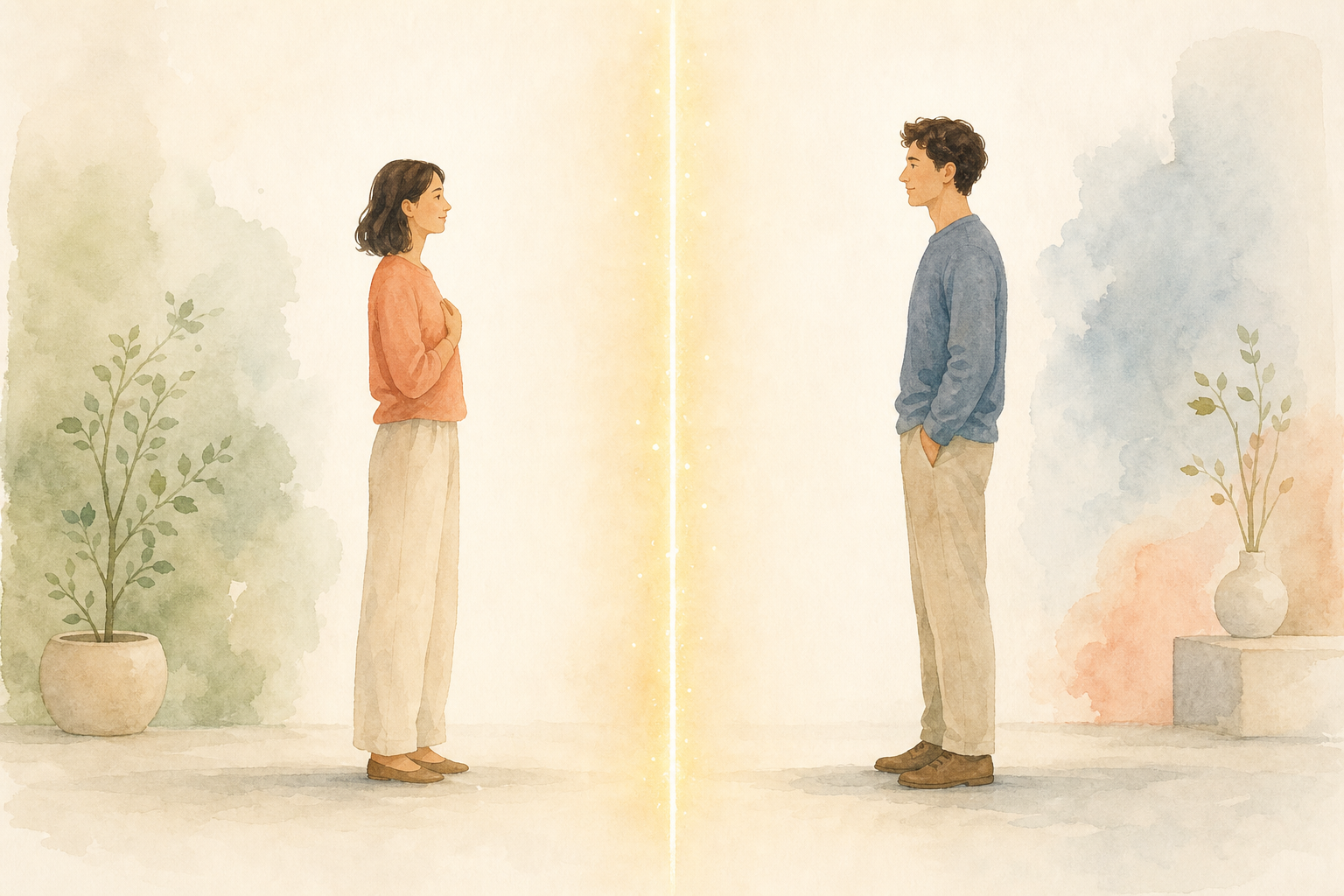
One person standing apart from a group in watercolor.

The plain idea

Norms shape behavior.

People often follow a group even when the group is wrong, because belonging and social safety are powerful.

Rules have functions.

A rule may protect safety, fairness, learning, dignity, power, convenience, image, or habit. The function matters.

Questioning is not chaos.

A rule can be examined without discarding all structure. The goal is wiser structure, not no structure.

How to use it

Use this door when the main accusation is "inappropriate," "rude," "weird," "not how we do things," or "people will talk," but no one has clearly named the harm.

Ask what the rule is protecting. If it protects safety, consent, honesty, or dignity, keep it strong. If it only protects image, hierarchy, or discomfort with difference, it may need revision.

  • Ask who is helped by the rule and who pays the cost.
  • Separate social embarrassment from actual harm.
  • Keep standards that protect people, not standards that erase people.
  • Offer an alternative that preserves respect without demanding sameness.
Minimal watercolor painting of one person near a group.
Boundary watercolor image.

Words you can use

When someone says "That is inappropriate""What harm are we trying to prevent, and what part is only unfamiliar?"
When a child is different"Different is not automatically disrespectful. Let us name the actual expectation and the reason for it."
When a rule is useful"This rule protects people's safety and dignity, so we will keep it. We can still explain it without shame."
Watercolor social rule image.
Minimal watercolor painting about social rules.
Person holding a glowing seed.

Real example

What it may look like

A person speaks directly in a culture that prefers indirectness, dresses differently, refuses small talk, asks a question no one else asks, or needs a different communication style.

Too-fast correction

"That is inappropriate." Without more detail, the person learns shame but not the actual expectation.

Better question

"Does this rule protect someone, or does it only protect the group from discomfort?"

A social rule deserves respect when it protects people. It deserves revision when it mainly protects the appearance of sameness.

Where the science points

In Solomon Asch's conformity experiments, many participants gave obviously wrong line-length judgments after hearing a unanimous group give the wrong answer.

In a hotel towel-reuse field experiment, Goldstein, Cialdini, and Griskevicius found that messages describing what most guests actually did increased towel reuse more than standard environmental appeals. Social norms can quietly steer behavior, even when no one gives a direct order.

  1. Asch, S. E. (1951). Effects of group pressure upon the modification and distortion of judgments.
  2. Goldstein, N. J., Cialdini, R. B., & Griskevicius, V. (2008). A room with a viewpoint: Using social norms to motivate environmental conservation in hotels.
  3. Cialdini, R. B., Reno, R. R., & Kallgren, C. A. (1990). A focus theory of normative conduct.