Rhada BloomBack to Seven Invitations

Invitation 3

Boundary

A boundary is not a mood, a punishment, or a demand for control. It is the line where safety, dignity, rights, or consent need protection.

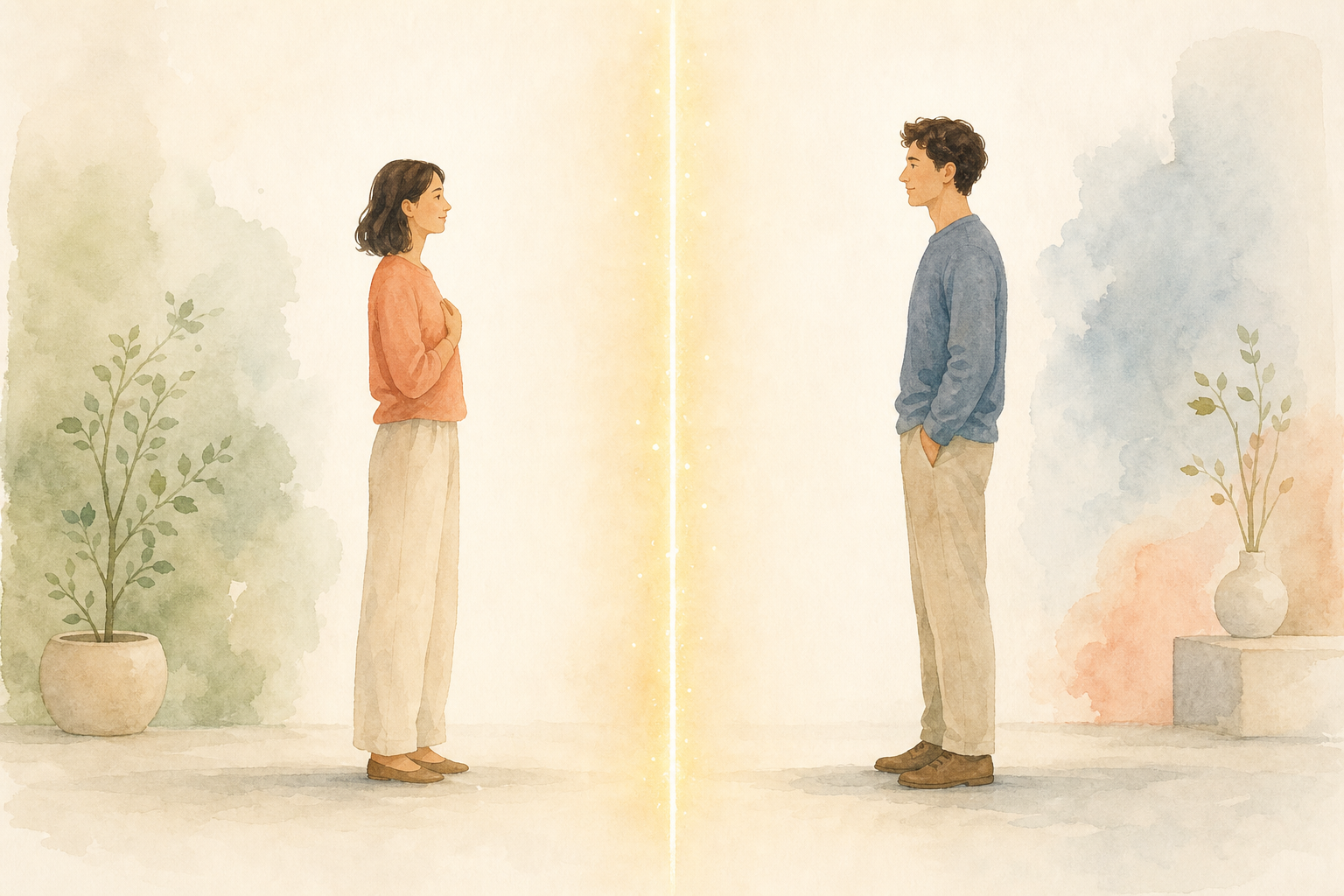
Two people with a soft boundary line in watercolor.

The plain idea

Boundaries protect agency.

People need to experience themselves as agents, not objects being managed, touched, exposed, mocked, or overruled.

Discomfort is data, not proof.

Feeling uncomfortable can signal a boundary, but the next step is to name what value needs protection.

Clarity lowers escalation.

A useful boundary says what is not okay, why it matters, and what action will happen next.

How to use it

Use this door when someone's body, privacy, time, belongings, story, dignity, consent, or emotional safety has been crossed.

A boundary is strongest when it stays specific. "You are toxic" creates a fight about identity. "I am not available for jokes about my body" gives the other person something clear to respect.

  • Name the protected value: safety, privacy, time, consent, dignity, health, or honesty.
  • Keep the sentence short enough to remember under stress.
  • State the next action you control instead of trying to control the other person.
  • Follow through calmly if the boundary is ignored.
Minimal watercolor painting of a calm boundary.
A person standing apart from a group.

Words you can use

Simple boundary"I am not okay with that. Please stop."
Boundary with next action"I am not available for jokes about that. If it continues, I will leave the conversation."
Boundary with a child"I will not let you hit. I am going to move my body back, and we can try words when you are ready."
Watercolor boundary image.
Minimal watercolor painting of a calm boundary.
Person holding a small glowing seed.

Real example

What it may look like

A person keeps touching someone's belongings, interrupting private time, mocking a vulnerable story, or ignoring a clear no.

Too-fast correction

"Stop being difficult." This frames self-protection as a personality problem.

Better boundary

"I am not available for jokes about that. If it continues, I will leave the conversation."

A boundary is not a punishment. It is information plus follow-through.

Where the science points

Classic personal-space studies found that when strangers invaded expected interpersonal distance, people showed discomfort and moved away. The body often detects a boundary before language catches up.

Self-determination theory also shows that autonomy is a basic psychological need. When autonomy is threatened, people often resist, withdraw, or comply without internal commitment.

  1. Felipe, N. J., & Sommer, R. (1966). Invasions of personal space.
  2. Deci, E. L., & Ryan, R. M. (2000). The "what" and "why" of goal pursuits: Human needs and the self-determination of behavior.
  3. Brehm, J. W. (1966). A theory of psychological reactance.