Rhada Bloom Back to Seven Invitations

Invitation 1

Life Map

Before you call a choice lazy, rebellious, unrealistic, or ungrateful, ask what future the person is trying to move toward.

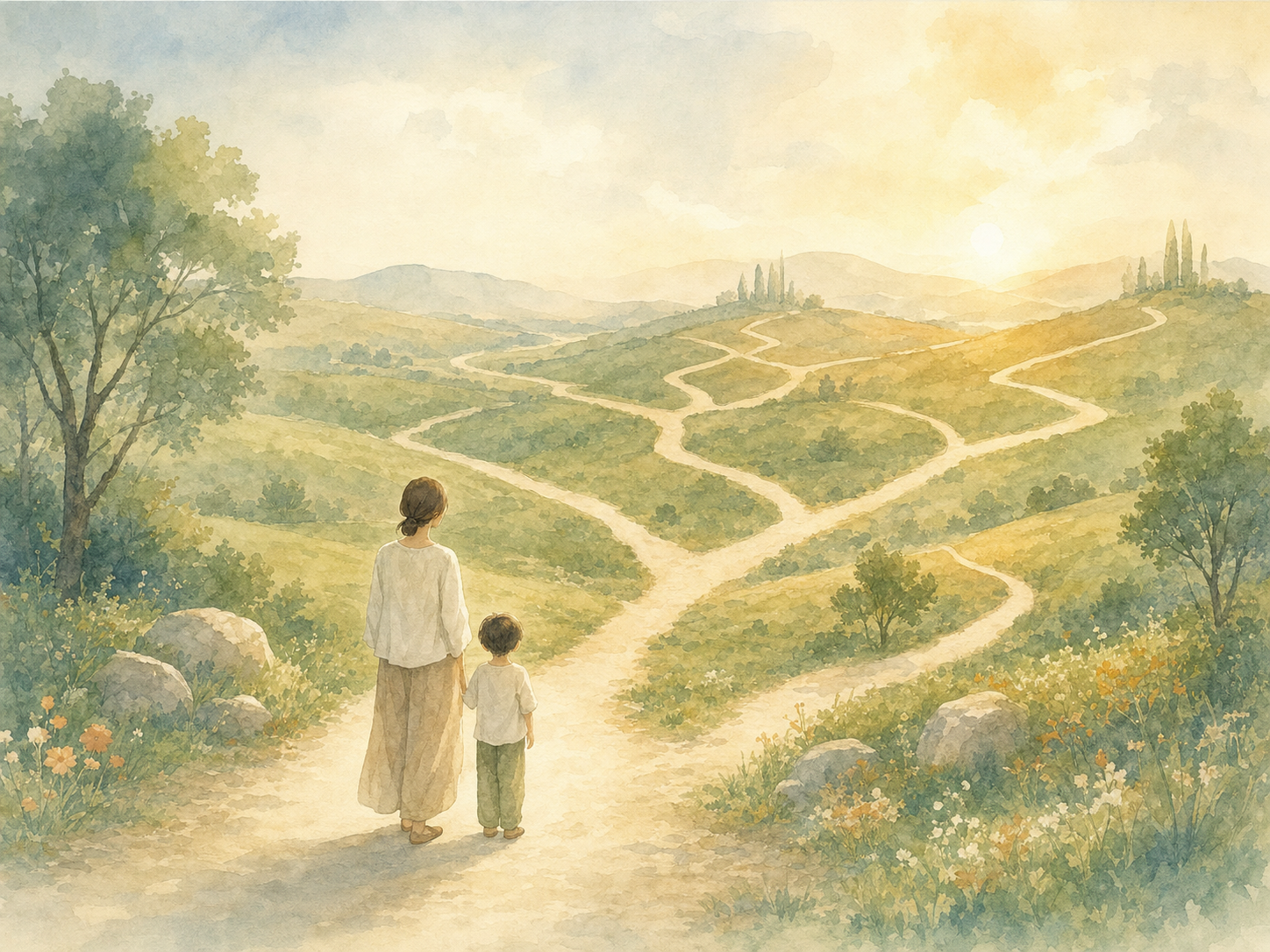
Child and adult before a branching watercolor life map.

The plain idea

Behavior has direction.

A choice usually points somewhere: toward belonging, freedom, safety, mastery, beauty, meaning, or relief.

Borrowed maps create confusion.

When a person is forced to live inside someone else's definition of success, compliance may look calm while the inner life goes quiet.

A useful map can be tested.

The goal is not to approve every dream. The goal is to turn vague longing into small experiments, evidence, and responsibility.

How to use it

Use Life Map when the conflict is about direction: school track, career, identity, values, faith, creativity, friendship, pace, or the kind of life someone keeps imagining.

Do not start by asking, "Is this right or wrong?" Start by asking, "What life is this person trying to build, and what do we know so far?" That question turns judgment into inquiry.

A good Life Map conversation holds two truths at the same time: the person's inner pull deserves respect, and the path still needs reality testing.

  • Name the future: "What kind of life does this choice seem connected to?"
  • Separate desire from plan: "What would make this direction more concrete?"
  • Gather evidence: "What small test can we run before making a large decision?"
  • Protect dignity: "We can question the plan without insulting the person."

Minimal watercolor painting of a life map.
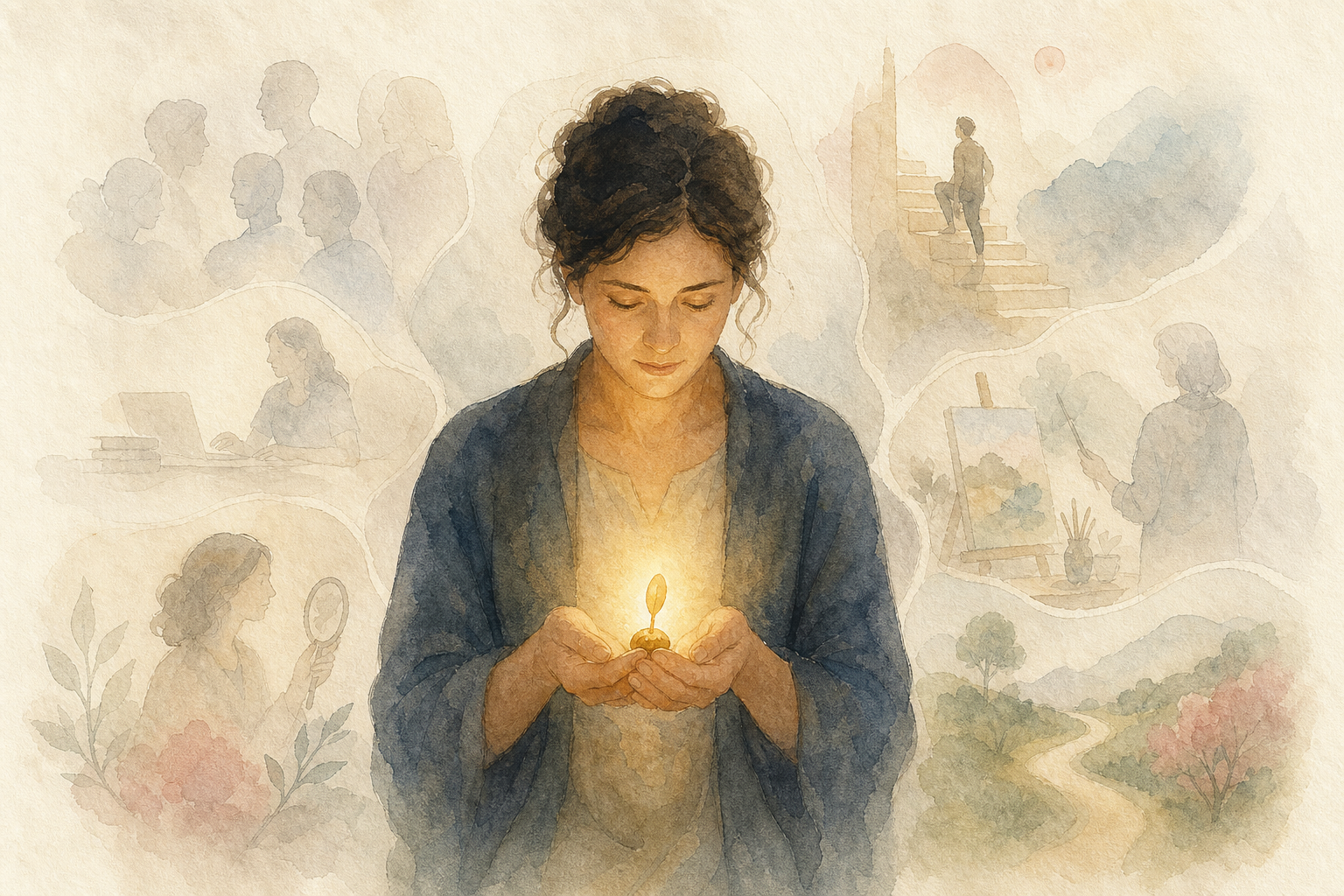
Person holding a small glowing seed.

Words you can use

When a child rejects the expected path"I want to understand the future you are imagining. Then we can decide what needs practice, evidence, or protection."
When a parent feels afraid"Fear is allowed, but fear cannot be the only map. Let us turn this into a responsible experiment."
When the person is vague"You do not need a perfect answer today. Give me one clue: what kind of work, place, rhythm, or contribution makes you feel more alive?"
Branching life map watercolor scene.
Minimal watercolor painting of a person holding a small plant.
Adult and child repairing together.

Real example

What it may look like

A teenager refuses a prestigious track chosen by the family and keeps returning to design, care work, food, ecology, music, or another direction that feels meaningful but less approved.

Too-fast correction

"You are wasting your potential." This may produce silence, secrecy, or surface obedience without real commitment.

Better response

"Show me the future you are protecting. Then let us test it with one course, one mentor conversation, one portfolio piece, or one real-world task."

A Life Map is not a promise that every dream will work. It is a respectful way to move from conflict to evidence.

Where the science points

In a goal-writing intervention with struggling university students, Morisano and colleagues found that students who wrote in detail about personally meaningful goals improved academic performance compared with controls. The useful part was not magic motivation; it was clearer self-direction.

Values-affirmation research shows a related pattern. Brief writing about personally important values can protect self-integrity under threat and help some students stay engaged.

Life-design and career-construction research applies the same idea to vocation: people need narratives that help them make sense of choices, transitions, and constraints.

  1. Morisano, D. et al. (2010). Setting, elaborating, and reflecting on personal goals improves academic performance.
  2. Cohen, G. L. et al. (2006). Reducing the racial achievement gap: A social-psychological intervention.
  3. Savickas, M. L. et al. (2009). Life designing: A paradigm for career construction in the 21st century.