Rhada BloomBack to Seven Invitations

Invitation 2

Mistake or Moral Failure?

A mistake is information before it is evidence against someone's character. The response should help the person see, learn, and repair.

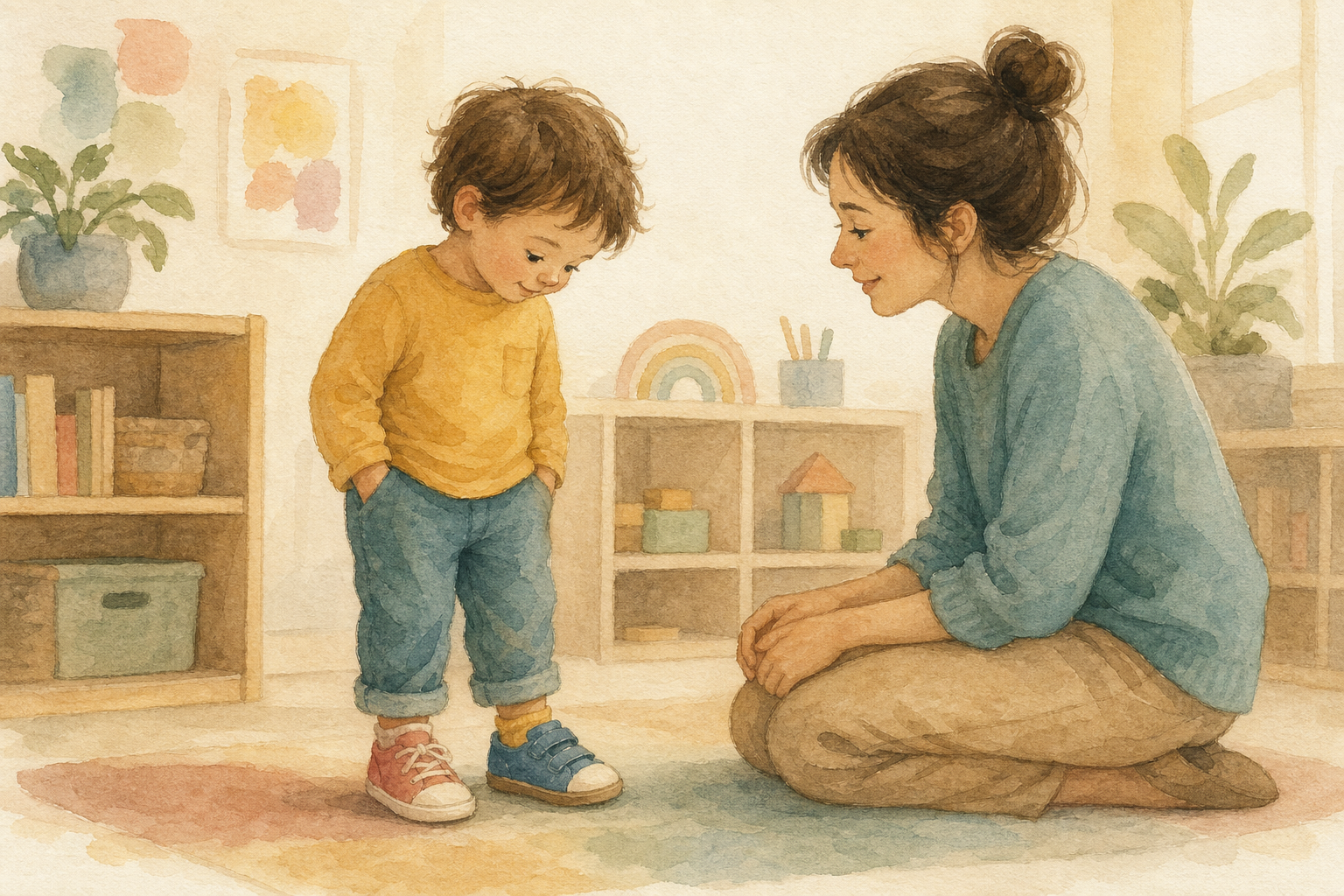
Child with mismatched shoes in a minimal watercolor scene.

The plain idea

Mistakes reveal the edge.

An error shows where attention, knowledge, coordination, timing, or judgment is still developing.

Shame interrupts learning.

When a mistake becomes an identity attack, the person often hides, argues, freezes, or performs competence instead of learning.

Correction needs a next step.

The best response names what happened, lowers threat, and gives one concrete way to try again.

How to decide

Use this door when there is no clear harm, no repeated refusal, and no evidence that the person understood the situation well enough to choose differently.

Ask what the mistake is teaching you. Did the person misunderstand the rule? Move too fast? Lack practice? Copy a wrong model? Panic under pressure? Each answer calls for a different kind of help.

  • Describe the action without a character label.
  • Ask what the person noticed before, during, and after the error.
  • Teach the missing piece in one small step.
  • Let repair happen if someone was inconvenienced or affected.
Minimal watercolor painting of learning from a mistake.
Child practicing a daily skill.

Words you can use

Instead of "What is wrong with you?""Something went wrong here. Let us slow it down and find the part we can learn from."
When the person feels embarrassed"You are not in trouble for being human. We still need to look at what happened."
When repair is needed"The mistake does not make you bad. It does mean we need to clean it up, apologize, replace it, or try again."
Mismatched shoes watercolor image.
Minimal watercolor painting about repair.
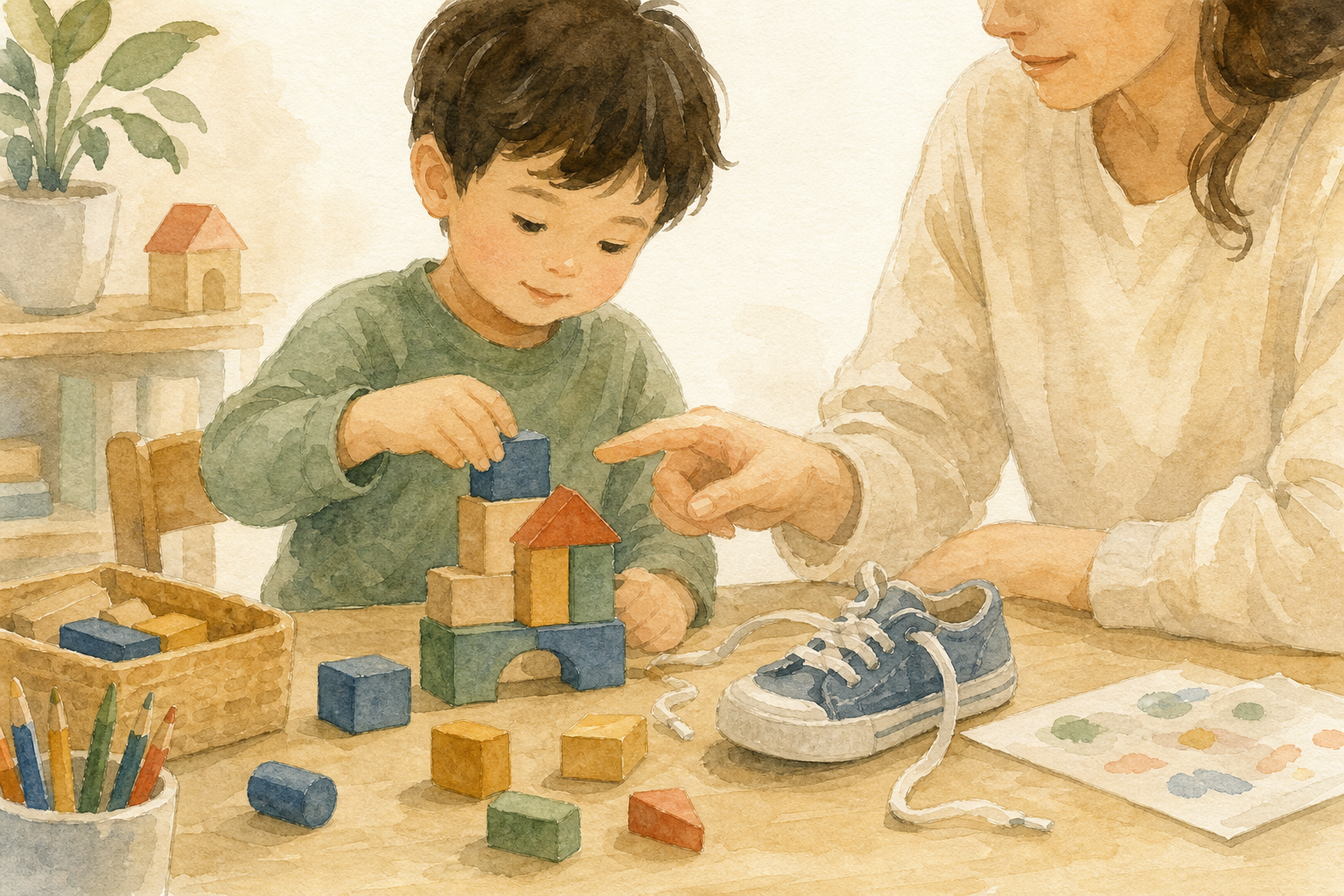
Adult and child repairing without shame.

Real example

What it may look like

A child wears mismatched shoes, spills water while pouring, answers confidently but incorrectly, or forgets a new routine.

Too-fast correction

"You never pay attention." This makes the person defend their identity instead of studying the mistake.

Better response

"What did this mistake show us? Which part can we practice once before we try again?"

Use the smallest useful correction. A mistake does not need a speech when a demonstration, pause, or redo would teach more.

Where the science points

Blackwell, Trzesniewski, and Dweck taught adolescents that intelligence can grow. Students receiving the intervention showed improved motivation and math grades compared with controls.

Error-management training studies show that people can learn effectively when they are encouraged to make errors, notice them, and use them as feedback rather than avoid them at all cost.

  1. Blackwell, L. S., Trzesniewski, K. H., & Dweck, C. S. (2007). Implicit theories of intelligence predict achievement across an adolescent transition.
  2. Keith, N., & Frese, M. (2008). Effectiveness of error management training: A meta-analysis.
  3. Metcalfe, J. (2017). Learning from errors.